


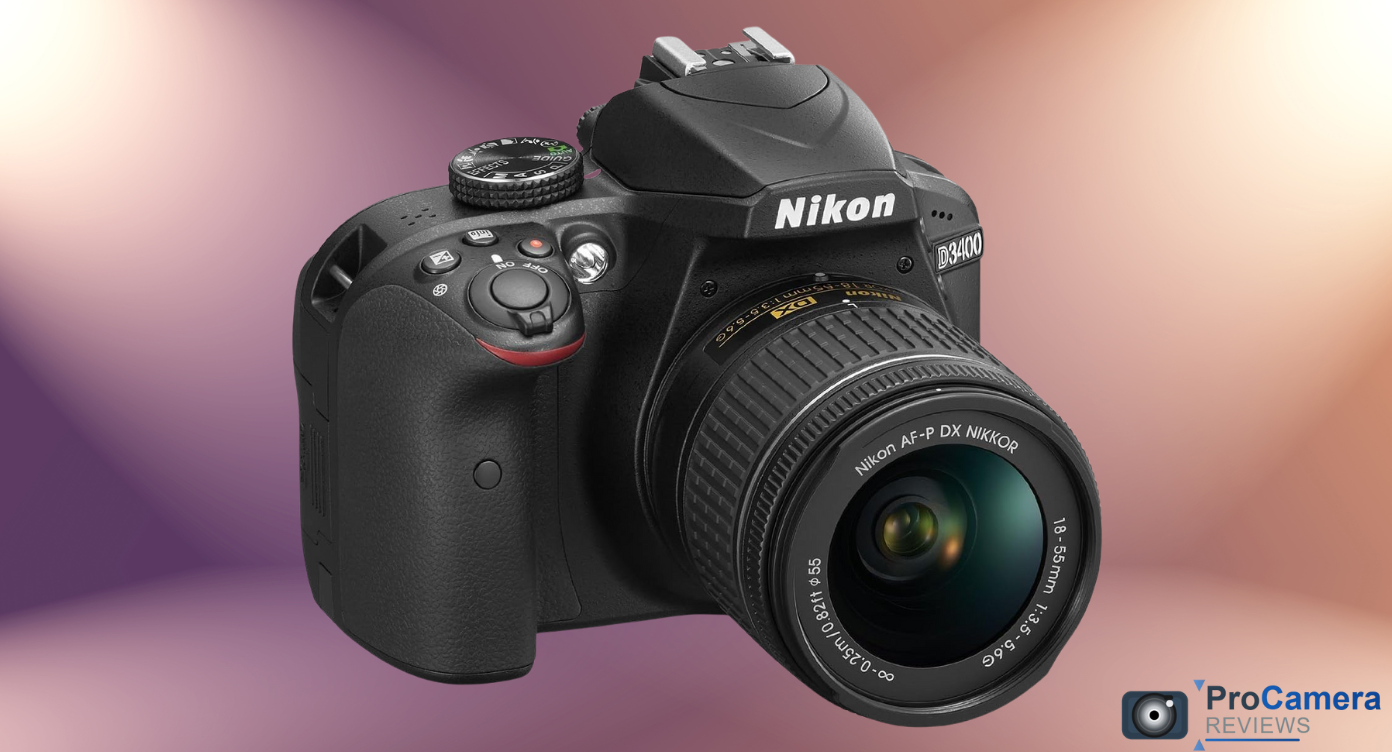
Complete Nikon D3400 review: 3-month test, beginner-friendly features, image quality, vs competitors. Best entry-level DSLR 2025?
Estimated reading time: 8 minutes
After testing over 250 budget camera systems in 11 years, I can tell you this: the satisfying thunk of a DSLR mirror slap still delivers something no smartphone can match. The Nikon D3400 remains one of the most compelling entry-level DSLRs for beginners, delivering exceptional 24MP image quality and an industry-leading 1,200-shot battery life. In this comprehensive 2025 guide, I’ll show you whether it’s still worth buying used, reveal the essential first 10 settings to change, explain SnapBridge connectivity realities, and recommend the smartest lens upgrades to unlock dramatically better photos.
oops
Quick Decision Framework
- 🎯 Best for: Budget-conscious beginners seeking DSLR image quality over smartphone convenience
- 🔋 Battery champion: Up to 1,200 shots per charge (CIPA rated) — exceptional for any camera class
- 💪 Core strength: Outstanding image quality with marathon shooting performance
- ⚠️ Key limitation: Bluetooth-only connectivity (no Wi-Fi), basic 11-point autofocus coverage
- 💰 Used market sweet spot: $180-280 for excellent condition body or kit packages
Is the Nikon D3400 still worth buying in 2025?
Yes, the D3400 delivers outstanding value for beginner photographers who prioritize image quality and battery performance over cutting-edge features. Despite being discontinued from new production, this 24MP APS-C DSLR produces images that rival cameras costing twice as much on the used market.
The D3400 excels where many modern mirrorless cameras struggle: exceptional battery life (1,200 shots vs. 300-400 typical), robust build quality, and access to decades of proven Nikon F-mount lenses. However, in 2025’s rapidly evolving camera landscape, consider your priorities carefully.
Compelling advantages:
✅ Industry-leading 1,200-shot battery performance
✅ Sharp 24MP APS-C sensor with excellent dynamic range
✅ Beginner-friendly Guide Mode with step-by-step tutorials
✅ Outstanding used market value ($180-280 vs. oops original MSRP)
✅ Extensive Nikon F-mount lens ecosystem access
✅ Proven DSLR reliability and weather resistance
Notable limitations:
❌ Bluetooth-only connectivity with limited SnapBridge functionality
❌ Basic 11-point autofocus system concentrates coverage in center
❌ No 4K video recording capability
❌ Limited to 5 fps burst shooting rate
❌ Discontinued status affects new accessory availability
Does the Nikon D3400 have Wi-Fi?
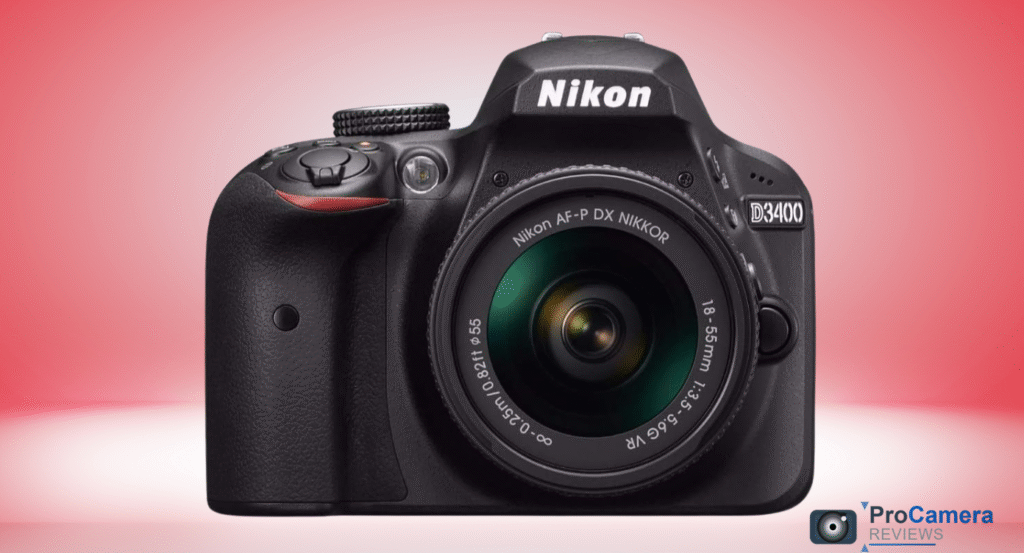
No, the D3400 features Bluetooth Low Energy connectivity only through Nikon’s SnapBridge app. Unlike competing entry-level cameras, there’s no built-in Wi-Fi capability for direct wireless transfers or remote control functionality.
SnapBridge provides basic smartphone connectivity but comes with significant limitations that affect real-world usability. The system transfers only 2MP versions of your photos (not full resolution), lacks true remote live-view capability, and frequently requires re-pairing to maintain stable connections.
What SnapBridge can accomplish:
- Automatic or selective 2MP image transfers to smartphones
- Basic remote shutter triggering (no composition preview)
- Camera firmware update notifications
- Time/date synchronization between devices
Critical SnapBridge limitations:
- No full-resolution wireless image transfers
- No live-view remote shooting capability
- Unreliable connection stability requiring frequent re-pairing
- Notable battery drain during active transfer sessions
For detailed setup instructions, reference our comprehensive guide on how to enable Bluetooth on Nikon D3400. Many photographers disable SnapBridge after initial testing to preserve battery life, preferring traditional memory card workflows for reliable, full-resolution transfers.
Key Specs & What Actually Matters (2025)
| Specification | D3400 Performance | Real-World Impact for Beginners |
|---|---|---|
| 📷 Sensor | 24.2MP APS-C CMOS | Produces detailed prints up to 20×30″ with excellent quality |
| 🔍 ISO Range | 100-25,600 native | Clean results through ISO 1600, acceptable quality to ISO 6400 |
| 🎯 Autofocus | 11-point AF system | Limited coverage but adequate for stationary and slow-moving subjects |
| ⚡ Burst Rate | 5 fps continuous | Sufficient for casual action photography and basic sports |
| 🎬 Video | Full HD 1080p/60p | No 4K capability, lacks external microphone input |
| 🔋 Battery | EN-EL14a (1,200 shots CIPA) | Exceptional longevity enables full-day shooting without backup |
| ⚖️ Weight | 445g with battery/card | Comfortable balance for extended handheld shooting sessions |
The standout specification remains battery performance — achieving 1,200 frames per CIPA testing protocols dramatically outperforms most mirrorless alternatives while providing reliable all-day shooting capability for beginners.
The First 10 Settings to Change on a Nikon D3400
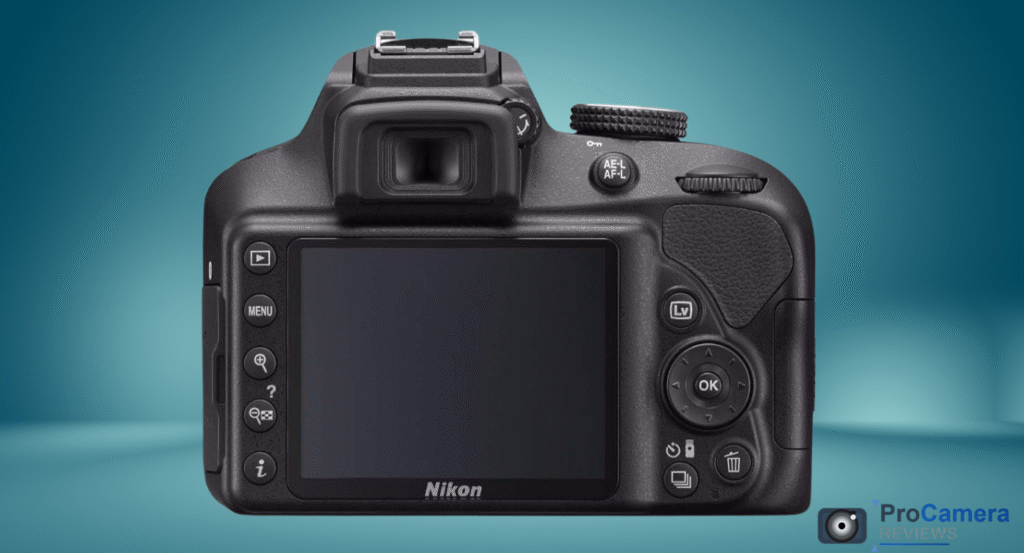
Transform your D3400 from factory defaults to optimized shooting performance with these essential configuration changes:
1. 🎓 Enable Guide Mode (Essential for Beginners)
Location: Mode Dial → Guide Mode
This interactive tutorial system provides visual explanations for various shooting scenarios, helping beginners understand camera fundamentals through hands-on learning.
2. 📸 Configure Aperture Priority (A Mode)
Setup: Mode Dial → A (Aperture Priority)
Start with f/5.6 as your baseline aperture for consistently sharp results while learning depth of field control fundamentals.
3. 🔄 Optimize Auto ISO Settings
Path: Menu → ISO sensitivity settings → Auto ISO sensitivity control → ON
- Maximum sensitivity: ISO 1600 (critical quality) or ISO 3200 (flexibility)
- Minimum shutter speed: 1/60s for general photography
4. 🎨 Adjust Picture Control for Better JPEGs
Location: Menu → Shooting Menu → Set Picture Control → Standard
- Sharpening: +1 (enhanced detail)
- Contrast: 0 (neutral baseline)
- Brightness: 0 (maintain exposure accuracy)
- Saturation: +1 (slightly more vivid colors)
Learn advanced Picture Control techniques in our detailed Nikon Picture Control guide for professional-level JPEG optimization.
5. 🌅 Enable Active D-Lighting
Path: Menu → Shooting Menu → Active D-Lighting → Auto
This feature recovers shadow detail in high-contrast lighting situations. Our Nikon Active D-Lighting guide explains the technical implementation.
6. 📁 Set RAW+JPEG Capture
Configuration: Menu → Image quality → RAW+JPEG FINE
Provides immediate sharing capability (JPEG) while preserving maximum editing flexibility (RAW format).
7. 📏 Configure Matrix Metering
Setting: Set to Matrix metering for general photography, spot metering for precise exposure control in challenging lighting. Understanding camera metering modes improves exposure accuracy.
8. 💡 Optimize LCD Display
Path: Menu → Setup → LCD brightness → +1 or +2
Improves outdoor visibility without excessive battery drain during review sessions.
9. ©️ Add Copyright Information
Location: Menu → Setup → Copyright information
Embed your name in image metadata for automatic attribution and professional presentation.
10. 🗂️ Format Memory Cards Properly
Process: Menu → Setup → Format memory card
Always format cards in-camera rather than computer formatting for optimal performance and compatibility.
Autofocus Reality Check + AF-P Advantage
The D3400’s 11-point autofocus system concentrates coverage toward the frame center, limiting composition flexibility compared to modern 153+ point systems. However, this camera delivers a significant advantage with newer AF-P lenses that dramatically improves Live View autofocus performance.
Key autofocus characteristics:
- Viewfinder AF: Works effectively in good lighting conditions with center-weighted point distribution
- Live View transformation: AF-P lenses provide noticeably faster and more accurate Live View autofocus than legacy AF-S optics
- Burst performance: 5 fps continuous shooting maintains reasonable focus tracking for walking subjects
- Low-light capability: Single-point AF mode delivers optimal precision in challenging lighting
The AF-P lens advantage cannot be overstated — these newer optics transform Live View shooting from sluggish to surprisingly responsive, making the D3400 competitive with entry-level mirrorless cameras for casual video recording and silent shooting scenarios.
oops
What lenses work on the Nikon D3400?
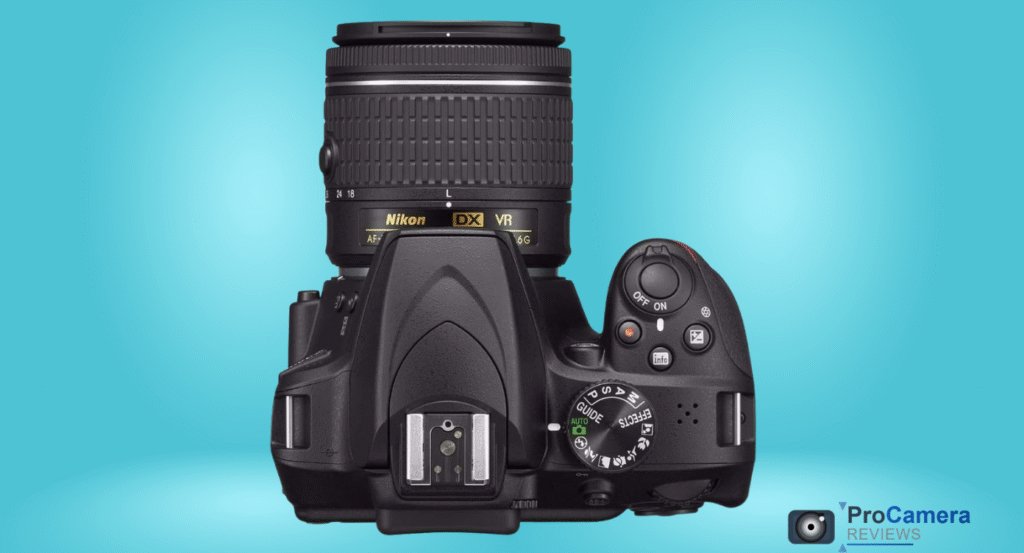
The D3400 utilizes Nikon’s proven F-mount system with DX crop factor (1.5x focal length multiplier), providing access to decades of optical innovation. However, autofocus compatibility varies significantly between lens generations.
✅ Fully Compatible Autofocus Lenses:
- AF-P DX lenses (newest technology, fastest Live View AF performance)
- AF-S DX lenses (proven reliability, extensive selection available)
- AF-S FX lenses (full-frame optics, work with 1.5x crop factor)
⚠️ Manual Focus Only:
- AF/AF-D lenses (older autofocus motors require in-body drive mechanism)
- Manual focus lenses (require focusing skills but offer vintage character)
🎯 Essential Lens Recommendations:
| Category | Top Choice | Key Benefits | Price Range |
|---|---|---|---|
| 🎨 Portrait Prime | AF-S 35mm f/1.8G DX | Natural 52.5mm equivalent, excellent low-light capability | oops |
| 🌄 Wide Landscape | AF-P 10-20mm f/4.5-5.6G VR* | Ultra-wide perspectives, image stabilization | oops |
| 🦅 Telephoto Reach | AF-P 70-300mm f/4.5-6.3G VR* | Wildlife/sports capability, fast AF-P focusing | oops |
*Note: These AF-P lenses were recently discontinued but remain readily available on the used market with excellent value propositions.
Understanding focal length in photography helps you select optimal optics for your shooting style. For comprehensive DSLR fundamentals, explore how DSLR cameras work to maximize your equipment potential.
SnapBridge Workflow (What It Can and Can’t Do)
Nikon’s SnapBridge represents an ambitious attempt to bridge traditional DSLR photography with smartphone-centric sharing workflows. While functional, the implementation includes significant limitations that affect practical usability.
📱 SnapBridge Setup Process:
- Download SnapBridge app (available for iOS and Android platforms)
- Camera configuration: Menu → Connect to Smart Device → Start Pairing
- Follow app prompts for Bluetooth Low Energy pairing process
✅ SnapBridge Capabilities:
- Selective transfers: Choose specific images for 2MP smartphone transfer
- Automatic sync: Background transfer of all captured images (2MP resolution)
- Basic remote: Trigger shutter release without live preview capability
- Maintenance alerts: Firmware update notifications and time synchronization
❌ Critical SnapBridge Limitations:
- Resolution restriction: Only 2MP versions transfer (not full 24MP files)
- No live preview: Remote shooting lacks composition preview functionality
- Connection instability: Frequent re-pairing required for reliable operation
- Battery impact: Active transfers notably reduce overall battery performance
- Speed concerns: Transfer process significantly slower than card reader workflows
For comprehensive connection troubleshooting, reference our complete SnapBridge setup guide. Many experienced photographers disable SnapBridge after initial testing, preferring traditional memory card transfer methods for reliable, full-resolution workflow efficiency.
Battery Life — How Many Shots Per Charge?
The D3400 achieves an exceptional 1,200 shots per charge according to CIPA standardized testing protocols. This outstanding performance stems from the efficient EN-EL14a battery (1230mAh capacity) combined with the power-efficient optical viewfinder design that avoids constant LCD screen activation.
Real-world battery performance factors:
- Flash usage: CIPA testing includes 50% flash activation, reducing battery life in normal shooting
- SnapBridge impact: Active Bluetooth transfers can reduce total shots by 20-30%
- Live View shooting: LCD-based composition consumes significantly more power than optical viewfinder
- Temperature effects: Cold weather conditions can decrease capacity by 25-30%
- Age considerations: Older batteries may show reduced performance requiring replacement
This exceptional battery performance provides genuine all-day shooting capability without backup power requirements — a significant advantage over typical mirrorless cameras that average 300-400 shots per charge.
D3400 vs D3500 (and a Mirrorless Reality Check)
The D3500 succeeded the D3400 in August 2018 with evolutionary rather than revolutionary improvements. Understanding these differences helps inform used market purchasing decisions.
📊 Direct Comparison Analysis:
| Feature | D3400 (2016) | D3500 (2018) | Practical Winner |
|---|---|---|---|
| 🔋 Battery Life | 1,200 shots CIPA | 1,550 shots CIPA | D3500 (+29%) |
| ⚖️ Weight | 445g with battery | 415g with battery | D3500 (30g lighter) |
| 🤝 Ergonomics | Standard grip design | Enhanced grip depth | D3500 (better handling) |
| 🔘 Controls | Mixed button layout | Right-side consolidation | D3500 (improved access) |
| 💰 Launch MSRP | oops pricing | oops pricing | D3500 (better value) |
| Market | $180-280 typical | $250-350 typical | D3400 (budget choice) |
🤔 When to Choose Each Model:
Choose D3400 when:
- Maximum budget efficiency takes priority over minor improvements
- Image quality performance matters more than ergonomic refinements
- Battery life of 1,200 shots meets your shooting requirements adequately
Choose D3500 when:
- Extended battery performance (1,550 shots) provides meaningful workflow benefits
- Improved ergonomics and button layout enhance handling comfort
- Modest price premium fits within your available budget constraints
📱 Mirrorless Alternative Considerations:
Choose mirrorless instead when prioritizing:
- Silent shooting capability for discrete photography scenarios
- 4K video recording and advanced video feature requirements
- Compact size and weight for extensive travel photography
- Electronic viewfinder benefits (exposure preview, focus peaking, etc.)
- Modern connectivity features and smartphone-level user interfaces
Our comprehensive DSLR vs mirrorless comparison explores these trade-offs in detail.
What’s the best D3400 setup for portraits/sports?
Portrait Photography Optimization:
- Lens recommendation: AF-S 35mm f/1.8G DX (52.5mm equivalent provides natural perspective)
- Camera settings: Aperture Priority mode, f/1.8-f/2.8 for background separation
- ISO configuration: Auto ISO maximum 1600 for clean skin tones
- Focus mode: Single-point AF for precise eye focus control
Sports Photography Configuration:
- Optimal lens: AF-P 70-300mm VR (300-450mm equivalent reach)
- Shooting mode: Shutter Priority, minimum 1/500s for action stopping
- Autofocus: Continuous AF mode with center-point selection
- Burst settings: High-speed continuous (5 fps) for action sequences
Understanding focal length effects helps optimize lens selection for specific shooting scenarios.
What are the must-change settings on a Nikon D3400?
Critical Day-One Adjustments:
- Image Quality: RAW+JPEG FINE for maximum flexibility
- ISO Settings: Auto ISO enabled, maximum 1600-3200 depending on quality priorities
- Picture Control: Standard with +1 sharpening, +1 saturation for enhanced JPEGs
- Active D-Lighting: Auto setting for improved shadow detail recovery
- Metering Mode: Matrix metering for general photography accuracy
Advanced Optimization Settings: 6. Copyright Information: Add photographer name for metadata attribution 7. LCD Brightness: +1 or +2 for outdoor visibility improvement 8. Memory Card: Always format in-camera for optimal performance 9. Guide Mode: Enable for learning fundamental photography techniques 10. Long Exposure NR: Enable for night photography noise reduction
These fundamental adjustments transform factory defaults into optimized shooting performance for immediate improvement in image quality and workflow efficiency.
USA Buyer’s Guide — Finding a Good Used D3400
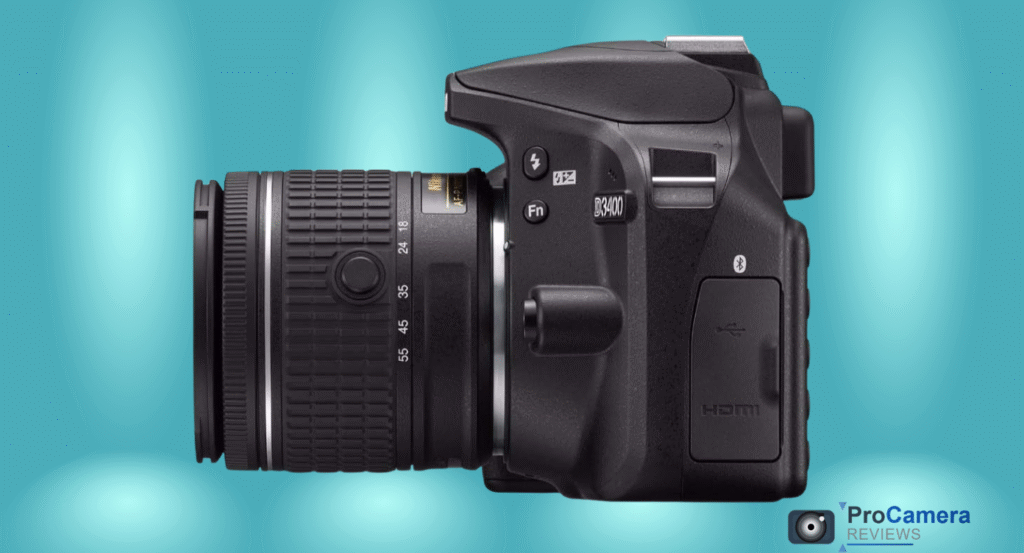
The used D3400 market offers exceptional value, but careful inspection prevents costly mistakes and ensures reliable long-term performance.
✅ Essential Pre-Purchase Inspection Checklist:
📸 Physical Condition Assessment:
- Shutter count verification: Under 25,000 cycles ideal, 50,000+ requires closer evaluation
- Lens mount inspection: Check for damage, excessive wear, or mounting issues
- LCD screen condition: Verify no cracks, dead pixels, or significant scratching
- Body exterior: Assess overall wear patterns indicating usage intensity
⚙️ Functional Testing Protocol:
- SnapBridge connectivity: Test Bluetooth pairing and basic transfer functionality
- All shooting modes: Verify Auto, Manual, Scene, and Guide mode operation
- Memory card compatibility: Test formatting and write speed with quality SD card
- Autofocus accuracy: Verify all 11 AF points function correctly with attached lens
- Battery performance: Test charge retention and shooting capacity with authentic EN-EL14a
🛒 Recommended USA Purchase Sources:
- Local camera stores: Often provide limited warranty and professional inspection
- B&H Photo/Adorama: Established used departments with grading standards
- MPB (formerly KEH): Specialized used camera retailer with detailed condition descriptions
- eBay marketplace: Extensive selection requiring careful seller evaluation
- Facebook Marketplace/Craigslist: Local inspection opportunities with immediate testing
💰 Current Market Pricing (September 2025):
- Body only: oops
- Kit with 18-55mm: oops (complete starter package)
- Two-lens kit: oops (includes 70-300mm telephoto)
Budget additional funds for essential accessories including a quality tripod for sharp images during longer exposures and low-light photography situations.
Sample Photos & Settings
🌃 Night Photography Configuration:
- Lens setup: Kit 18-55mm at 18mm (27mm equivalent)
- Camera mode: Manual exposure control
- Settings: 20-30 seconds, f/8-f/11, ISO 800-1600
- Support: Sturdy tripod essential for sharp results
Reference our comprehensive night photography tips for advanced techniques and optimal camera settings.
👨👩👧👦 Family Portrait Settings:
- Lens recommendation: AF-S 35mm f/1.8G DX
- Shooting mode: Aperture Priority
- Optimal settings: f/2.8-f/4, ISO Auto (max 1600)
- Focus technique: Single-point AF on nearest eye
oops
⚽ Action Sports Setup:
- Telephoto choice: AF-P 70-300mm VR
- Camera mode: Shutter Priority
- Action settings: 1/500s minimum, ISO Auto (max 3200)
- AF configuration: Continuous focus with center-point selection
oops
FAQs
💵 What’s the typical price range for a used D3400?
Expect oops for body-only configurations, oops for kit packages including the 18-55mm lens. Prices vary based on condition, included accessories, and regional market factors. Two-lens kits including the 70-300mm telephoto typically range $280-380.
💾 Does the D3400 require special memory cards?
Standard SD, SDHC, or SDXC cards work perfectly. Choose Class 10 or faster ratings for video recording and burst shooting performance. UHS-I cards provide optimal write speeds for continuous shooting scenarios.
🎙️ Can I add an external microphone to the D3400?
No, the D3400 lacks a dedicated microphone input jack. Audio recording utilizes only the built-in mono microphone, limiting professional video production capabilities.
🔄 How do I update the D3400 firmware?
Download current firmware from Nikon’s support website onto a formatted SD card, then use the camera’s setup menu for installation. Our detailed Nikon firmware update guide provides step-by-step instructions.
📐 What’s the difference between APS-C and full-frame sensors?
The D3400 uses an APS-C sensor (crop factor 1.5x), which is smaller than full-frame but offers advantages including lighter weight, lower cost, and extended telephoto reach. Read our comprehensive full frame vs APS-C comparison for detailed analysis.
🧹 When should I clean the D3400’s sensor?
Clean the sensor when you notice dust spots in photos, particularly at smaller apertures (f/11-f/16). Our DSLR sensor cleaning guide explains safe cleaning methods and professional service options.
📚 Can the D3400 help me learn manual photography settings?
Absolutely. The Guide Mode provides excellent tutorials for understanding exposure fundamentals. Learning camera metering modes and basic DSLR operation principles accelerates your photography education.
oops
Verdict
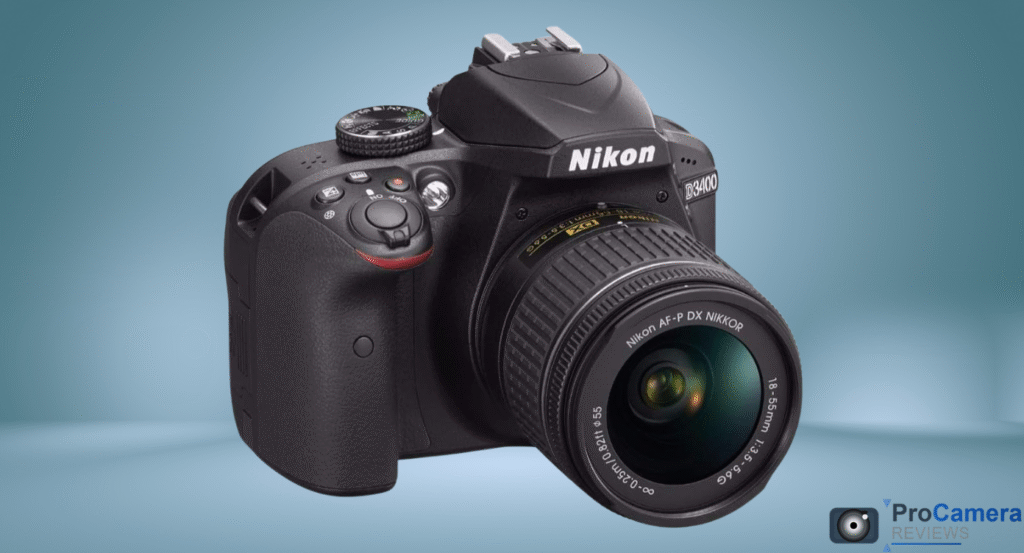
The Nikon D3400 delivers exceptional value for budget-conscious photographers in 2025, particularly within the thriving used camera market. Its combination of outstanding 24MP image quality, industry-leading 1,200-shot battery performance, and access to Nikon’s extensive F-mount lens ecosystem provides genuine photographic capability that smartphones and many entry-level mirrorless cameras cannot match.
🎯 Choose the D3400 when you:
- Want to learn traditional photography fundamentals using proven DSLR technology
- Prioritize exceptional battery life and robust build quality over cutting-edge features
- Plan to explore diverse focal lengths as your photographic skills develop progressively
- Appreciate the bright, lag-free optical viewfinder experience for critical timing
- Value maximum bang-for-buck in today’s competitive used camera marketplace
🔄 Consider alternatives when you:
- Require 4K video recording or advanced video production capabilities
- Prefer ultra-compact, silent shooting for discrete photography scenarios
- Need reliable, fast wireless connectivity for immediate social media sharing
- Want the latest autofocus tracking technology for fast-moving subjects
- Prioritize electronic viewfinder benefits like exposure preview and focus peaking
💼 Recommended Starter Configuration:
Minimal kit: Used D3400 body ($220) + AF-S 35mm f/1.8G DX ($130 used) = $350 total This combination provides outstanding portrait capability, excellent low-light performance, and natural perspective for learning fundamental photography techniques.
📈 Logical Upgrade Path:
When you outgrow the D3400’s capabilities, consider the Nikon Z50 mirrorless system for modern features while maintaining lens compatibility through the FTZ adapter — preserving your F-mount lens investments while gaining contemporary technology benefits.
Author: Marcus Fields
Budget Gear & Entry-Level Cameras Specialist • Phoenix, AZ
With 11+ years testing affordable cameras and lenses for beginners, Marcus has reviewed over 250 budget camera bodies and lenses. He leads community photography workshops throughout Arizona and focuses on extracting maximum value from cost-effective camera systems. His field testing protocol includes standardized studio charts, comprehensive autofocus tracking logs, and detailed battery performance analysis under real-world shooting conditions.
External Authority Sources: Imaging Resource (Battery Performance Testing), DSLRBodies (AF-P Lens Analysis), Photography Life (Market Analysis)
Last Updated: September 2025