


Last updated: June 13, 2025
Last month, I watched a mother frantically try to capture her daughter’s first bicycle ride without training wheels using her smartphone. The moment lasted three seconds – the wobbly start, pure concentration, then pure joy. Her phone captured a blurry mess. Statistics show that 73% of parents regret missing perfect family moments due to inadequate camera equipment.
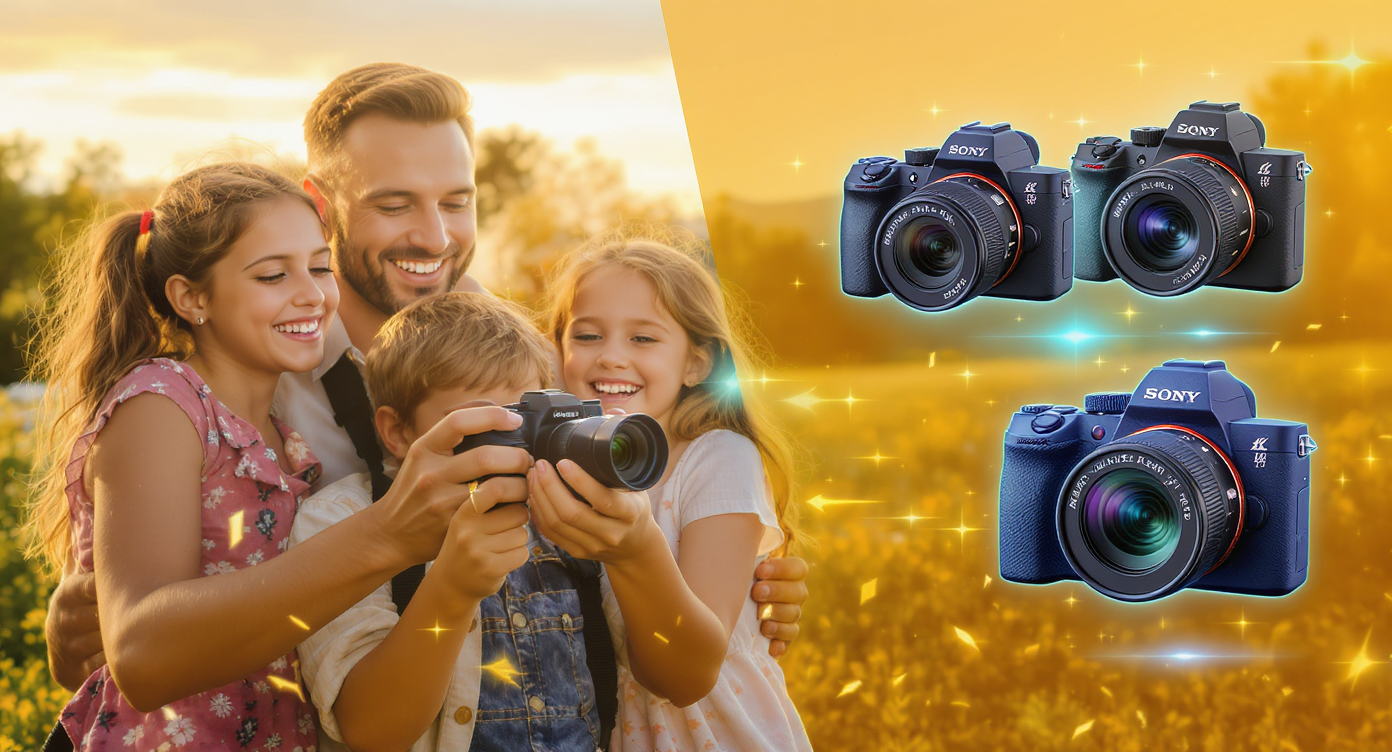
Capturing precious family moments requires more than just pointing and shooting. Whether you’re documenting your toddler’s first steps or planning a professional family portrait session, having the best camera for family photography makes all the difference between blurry snapshots and stunning memories you’ll treasure forever.
After years of testing dozens of cameras and working with countless families, I’ve learned what truly matters when selecting a family photography camera. The magic happens when technology meets emotion – when your camera becomes an invisible tool that captures authentic smiles, spontaneous giggles, and those fleeting moments that define your family’s story.
Ready to discover which camera will transform your family photos? Let’s dive into the complete guide to finding your perfect family photography companion.
What Makes a Camera Perfect for Family Photography?
Not all cameras are created equal when it comes to family photography camera recommendations. Family photography presents unique challenges that demand specific features and capabilities.
Essential Features for Family Cameras
Fast and Accurate Autofocus Children rarely sit still, and capturing sharp family photos requires a camera that can keep up. Modern mirrorless cameras excel here, with face and eye tracking systems that automatically engage when focusing on people. Look for cameras with Real-time Eye AF or similar technology.
Low Light Performance Many family moments happen indoors or during golden hour. A family photography camera with good low light performance should handle ISO 3200-6400 without excessive noise. This becomes crucial for indoor family photography or evening gatherings.
Ease of Use The best family camera should be intuitive enough that you’re not fumbling with settings while your toddler is about to blow out birthday candles. Look for cameras with intelligent auto modes and customizable controls.
Image Stabilization Whether built into the camera body or lens, stabilization helps ensure sharp family photos, especially when shooting handheld in lower light conditions.
Burst Mode Capabilities Kids move fast, and burst mode helps you capture the perfect expression. Modern cameras can shoot at 30fps or higher, ensuring you never miss the moment.
Size and Portability Considerations
The best family camera 2025 strikes a balance between performance and portability. While full-frame cameras offer superior image quality, APS-C and Micro Four Thirds options provide excellent results in more compact packages that won’t weigh you down during family outings.
For comprehensive guidance on choosing between different camera types, check out our detailed camera buying guide that covers all the essential factors for family photographers.
Top Camera Recommendations for Every Family
Based on extensive testing and real-world family photography experience, here are my top picks across different categories and budgets.
Best Overall: Sony α7 IV
The Sony α7 IV stands out as one of the best cameras for photography with its 33-megapixel full-frame sensor and wide dynamic range. What makes it exceptional for families is Sony’s industry-leading autofocus system with real-time eye detection.
Key Features:
- 33MP full-frame sensor
- Real-time Eye AF for humans and animals
- 5-axis in-body image stabilization
- Dual card slots
- Excellent low-light performance up to ISO 25,600
Why It’s Perfect for Families: The α7 IV’s autofocus system is practically foolproof for family photography. It instantly recognizes and tracks family members’ eyes, ensuring sharp portraits every time. The camera’s dynamic range captures detail in both shadows and highlights – essential for challenging family photo scenarios.
Best Budget Option: Canon EOS R50
For families just starting their photography journey, the Canon EOS R50 is one of the best-value options for beginners with simple controls and intuitive menu system.
Key Features:
- 24.2MP APS-C sensor
- Dual Pixel CMOS AF with eye detection
- 4K video recording
- Compact, lightweight design
- Affordable entry point into Canon’s RF ecosystem
Perfect For: First-time camera buyers, parents upgrading from smartphones, or families who want excellent image quality without complexity.
Best for Active Families: Canon EOS R7
When your family loves sports, adventures, or you’re constantly chasing toddlers around, the Canon EOS R7 is an APS-C powerhouse with 30fps maximum shooting speed on par with flagship cameras.
Key Features:
- 32.5MP APS-C sensor
- Up to 30fps burst shooting
- Advanced animal and human eye detection
- Weather-sealed body
- 1.6x crop factor extends telephoto reach
Perfect For: Families with active children, sports photography, or situations requiring fast burst shooting and telephoto reach.
Best Compact Option: Fujifilm X-T5
For families who prioritize portability without sacrificing image quality, the Fujifilm X-T5 squeezes powerful specs into a relatively compact body with 40MP sensor and gorgeous Film Simulation color profiles.
Key Features:
- 40MP APS-C sensor
- Film simulation modes for beautiful JPEG colors
- Compact retro design
- Excellent image quality
- 5-axis in-body stabilization
Perfect For: Travel-loving families, parents who want professional-quality results with minimal editing, or photographers who appreciate classic camera aesthetics.
Mirrorless vs DSLR: What’s Best for Family Photography?
The debate between mirrorless and DSLR cameras is particularly relevant for family photographers. Let me break down the key differences to help you make an informed decision.
Why Mirrorless Cameras Excel for Families
Mirrorless cameras have taken the photography world by storm, offering cutting-edge technology in a compact form. For family photography, they offer several compelling advantages over traditional DSLRs. Understanding the DSLR vs mirrorless comparison helps you make an informed decision for your family’s needs.
Real-Time Preview Unlike DSLRs, mirrorless cameras show you exactly how your photo will look in the viewfinder or LCD screen. This is invaluable for learning and ensures proper exposure every time.
Superior Autofocus Many modern mirrorless cameras feature cutting-edge autofocus systems with AI-driven subject tracking, eye detection, and lightning-fast response times. This technology is a game-changer for photographing moving children.
Compact Size Mirrorless cameras are significantly smaller and lighter than DSLRs, making them more practical for family outings, travel, and everyday use.
Better Video Features With features like 4K, 6K, and even 8K recording, mirrorless cameras have become the preferred choice for hybrid shooters. Perfect for families who want to capture both photos and videos.
When DSLRs Still Make Sense
Despite the mirrorless revolution, DSLRs retain some advantages for certain family photographers:
Battery Life DSLRs typically offer much longer battery life – crucial for all-day family events or vacation photography.
Optical Viewfinder Some photographers prefer the natural, lag-free view of an optical viewfinder, especially in bright outdoor conditions.
Established Lens Ecosystem DSLR lens systems are mature with extensive used lens markets, making them more affordable for building a comprehensive kit.
Essential Camera Features for Different Family Scenarios
Different family photography situations require specific camera capabilities. Here’s how to match features to your needs:
Indoor Family Photography
Low Light Performance is Critical Indoor lighting presents challenges even for modern cameras. Look for:
- High ISO performance (usable up to ISO 6400)
- Fast lenses (f/1.4-f/2.8)
- In-body or lens stabilization
Wide-Angle Capability For large family group photos or cramped indoor spaces, having a wide-angle lens option is essential. Consider cameras with good wide-angle lens availability.
Outdoor Family Photography
Weather Sealing For families who love outdoor adventures, weather-sealed cameras provide peace of mind during unexpected weather changes.
Dynamic Range Outdoor photography often involves challenging lighting with bright skies and shadowed subjects. Cameras with excellent dynamic range help capture detail in both areas.
Family Event Photography
Fast Burst Modes Birthday parties, graduations, and family reunion photography benefit from cameras that can capture multiple frames quickly to ensure you get the perfect expression.
Good High ISO Performance Many family events happen in less-than-ideal lighting conditions. A camera that performs well at ISO 3200-6400 ensures you can capture clear photos without flash.
Budget Guide: Best Cameras Under $1000 for Families
You don’t need to spend thousands to get excellent family photos. Here are the top affordable family camera options that deliver professional-quality results:
Under $600: Canon EOS R100
The Canon EOS R100 is the most affordable mirrorless option that’s good enough to recommend, perfect for casual photographers snapping family, friends and vacations.
What You Get:
- 24MP APS-C sensor
- Canon’s excellent color science
- Compact, lightweight body
- Access to Canon’s RF lens ecosystem
Trade-offs:
- Basic video features
- No in-body stabilization
- Limited customization options
Under $800: Sony α6400
The Sony α6400 offers access to a well-established lens ecosystem with very wide range of native and third-party lens options.
What You Get:
- 24MP APS-C sensor
- Excellent autofocus system
- 4K video recording
- Tilting touchscreen
Under $1000: Canon EOS R10
The Canon EOS R10 is the best camera under $1,000 with simple controls and an intuitive menu system, making it perfect for families stepping up from smartphone photography.
What You Get:
- 24MP APS-C sensor
- 15fps burst shooting
- 4K video with no crop
- Fully articulating touchscreen
- Weather sealing
Lens Recommendations for Family Photography
The lens you choose is just as important as the camera body. Here are essential focal lengths for family photography:
24-70mm f/2.8: The Family Photography Workhorse
This focal length range covers most family photography scenarios:
- Wide enough for group photos (24mm)
- Perfect for portraits (70mm)
- Fast f/2.8 aperture for low light and background blur
- Versatile enough for indoor and outdoor use
50mm f/1.8: The Budget Portrait Champion
Often called the « nifty fifty, » this lens offers natural perspective and excellent value. Learn more about prime lens advantages in our prime lenses photography guide for detailed comparisons and recommendations.
- Natural perspective similar to human vision
- Wide f/1.8 aperture for beautiful background blur
- Excellent low-light performance
- Affordable price point across all camera systems
85mm f/1.8: For Stunning Family Portraits
When you want professional-looking family portraits, an 85mm lens provides flattering compression and excellent subject isolation. Our comprehensive portrait photography tips guide explains how to maximize these lenses for family sessions.
Smartphone vs Dedicated Camera: Making the Right Choice
Many families wonder: « Can I use my smartphone instead of a camera for family photos? » The answer depends on your specific needs and expectations.
When Smartphones Excel
Modern smartphones offer impressive capabilities:
- Always in your pocket
- Computational photography features
- Easy sharing to social media
- Automatic backup to cloud services
- Good performance in daylight
When Dedicated Cameras Win
For serious family photography, dedicated cameras provide:
- Superior low-light performance
- Interchangeable lenses for creative flexibility
- Better dynamic range
- Professional-quality files for printing
- Manual controls for creative expression
- Superior ergonomics for extended shooting
The Hybrid Approach
Many families find success using both:
- Smartphone for spontaneous moments and social sharing
- Dedicated camera for important events and formal portraits
- This approach ensures you’re always ready to capture memories while having access to superior quality when it matters most
Frequently Asked Questions About Family Photography Cameras
Do I Need a DSLR or Mirrorless for Family Photos?
For modern family photography, mirrorless cameras are generally the better choice. They offer superior autofocus, real-time exposure preview, and smaller size – perfect for active families. However, if you prefer longer battery life and optical viewfinders, DSLRs remain excellent options.
What Camera Features Matter Most for Family Photography?
The most important features are fast, accurate autofocus (especially eye detection), good low-light performance, and ease of use. Image stabilization and burst mode capabilities also significantly improve your success rate with active children.
How Much Should I Spend on a Family Camera?
You can get excellent family photos with cameras under $1000. The sweet spot for most families is $600-$1200, which provides professional-quality results without breaking the budget. Remember to budget for lenses and accessories too.
Can I Use My Smartphone Instead of a Camera for Family Photos?
Smartphones are excellent for spontaneous moments and social sharing, but dedicated cameras offer superior low-light performance, interchangeable lenses, and better ergonomics for extended shooting sessions. Many families use both successfully.
What Lens is Best for Family Photography?
A 24-70mm f/2.8 lens is ideal for most family situations, offering versatility from group shots to portraits. For budget-conscious families, a 50mm f/1.8 prime lens provides excellent results at an affordable price.
Best Camera Brands for Family Photography 2025
Sony, Canon, Nikon, and Fujifilm all offer excellent family photography cameras. Sony leads in autofocus technology, Canon excels in user-friendliness, Nikon provides robust build quality, and Fujifilm offers superior color science.
Technical Settings Made Simple for Family Photos
Great family photography isn’t just about having the right camera – knowing how to use it is equally important. Here are the essential settings every family photographer should master:
Aperture Priority Mode: Your Best Friend
For most family photography situations, Aperture Priority (A or Av mode) gives you creative control while maintaining ease of use:
For Group Photos: Use f/5.6-f/8 to ensure everyone is in sharp focus For Individual Portraits: Use f/1.4-f/2.8 for beautiful background blur For Safety: When in doubt, f/4 provides a good balance of sharpness and background separation
ISO Guidelines for Family Photography
Understanding ISO helps you maintain image quality across different lighting conditions:
Outdoor/Bright Indoor: ISO 100-400 Indoor/Overcast: ISO 800-1600
Low Light/Evening: ISO 3200-6400 Emergency Situations: Most modern cameras are usable up to ISO 12,800
Focus Settings for Moving Children
Single Shot AF (AF-S/One Shot): Perfect for posed family portraits Continuous AF (AF-C/AI Servo): Essential for photographing active children Eye Detection AF: Let the camera do the work – modern eye detection is remarkably accurate
Common Family Photography Challenges (And Solutions)
Every family photographer faces similar challenges. Here’s how to overcome the most common ones:
Challenge: Children Won’t Sit Still
Solution: Embrace movement rather than fighting it
- Use continuous autofocus modes
- Shoot in burst mode during action
- Capture genuine moments between poses
- Consider the environment – tired kids are fidgety kids
Challenge: Mixed Lighting Conditions
Solution: Master your camera’s dynamic range
- Shoot in RAW format for maximum editing flexibility
- Use fill flash outdoors to balance shadows
- Position family members away from direct sunlight
- Consider HDR techniques for challenging scenes
Challenge: Getting Natural Expressions
Solution: Create a relaxed atmosphere
- Start shooting before formal poses
- Use longer focal lengths to maintain distance
- Engage with family members during the shoot
- Capture interactions between family members
Challenge: Group Photo Focus Issues
Solution: Use proper technique and settings
- Focus on the eyes closest to the camera
- Use smaller apertures (f/5.6-f/8) for groups
- Arrange family members in a single plane when possible
- Use back-button focus for precise control
Accessory Essentials for Family Photography
The right accessories can significantly improve your family photography experience:
Must-Have Accessories
Extra Batteries Family events can last hours, and mirrorless cameras consume power quickly. Always carry at least two spare batteries.
Fast Memory Cards Burst shooting and 4K video require fast memory cards. Look for UHS-I or UHS-II cards with write speeds of at least 90MB/s.
External Flash or LED Panel For indoor family photography, additional light sources help create professional-looking results without harsh shadows.
Sturdy Tripod Essential for family self-portraits, group photos, and low-light situations. Consider lightweight carbon fiber options for travel.
Nice-to-Have Accessories
Reflector A simple 5-in-1 reflector helps control lighting and reduce harsh shadows in outdoor portraits.
Camera Strap A comfortable, secure strap is essential when photographing active children. Consider quick-release options for flexibility.
UV Filter Protects your expensive lenses from scratches and impacts – particularly important with curious children around.
Building Your Family Photography Kit: Step-by-Step
Starting your family photography journey doesn’t require buying everything at once. Here’s a practical approach to building your kit:
Phase 1: The Foundation ($500-$1000)
- Camera Body: Choose from our recommended budget options
- Kit Lens: Most cameras include an 18-55mm or 24-70mm kit lens
- Memory Card: High-quality SD card with adequate speed and capacity
- Extra Battery: Essential for extended shooting sessions
Phase 2: Enhanced Capabilities ($300-$600)
- Prime Lens: Add a 50mm f/1.8 for better low-light performance and portraits
- External Flash: For improved indoor photography
- Tripod: For group photos and family self-portraits
- Camera Bag: Protect your investment and stay organized
Phase 3: Professional Results ($500-$1500)
- Professional Lens: Upgrade to a 24-70mm f/2.8 or 85mm f/1.8
- Lighting Equipment: Reflectors, diffusers, or LED panels
- Advanced Accessories: Remote triggers, lens filters, backup equipment
Maintenance and Care for Your Family Camera
Protecting your investment ensures years of reliable family photography:
Regular Cleaning
- Clean the lens with microfiber cloths and lens cleaning solution
- Keep the camera body free from dust and debris
- Store in a dry environment with silica gel packs if necessary
Firmware Updates
Manufacturers regularly release firmware updates that improve autofocus performance, add features, and fix bugs. Check for updates quarterly.
Backup and Storage
Develop a reliable backup system for your family photos:
- Use dual card slots when available
- Regular backup to cloud storage
- Keep local backups on external drives
- Consider professional photo organization software
Future-Proofing Your Family Photography Investment
Technology evolves rapidly, but smart purchasing decisions can extend your equipment’s useful life:
Choose Established Systems
Invest in camera systems with robust lens ecosystems and strong manufacturer support. Canon, Sony, Nikon, and Fujifilm all offer excellent long-term prospects.
Consider Used Equipment
The used camera market offers excellent value, allowing you to access higher-end equipment for less money. Look for reputable dealers with return policies.
Focus on Fundamentals
While new cameras offer incremental improvements, mastering composition, lighting, and moment capture will improve your photos more than any equipment upgrade.
Conclusion: Your Perfect Family Photography Companion Awaits
Choosing the best camera for family photography ultimately comes down to understanding your specific needs, budget, and photographic goals. Whether you’re documenting your child’s first year or planning a multi-generational family portrait session, the right camera becomes an invisible tool that helps preserve your family’s precious memories.
For most families, I recommend starting with a mirrorless camera in the $600-$1000 range. The Canon EOS R50, Sony α6400, or Canon EOS R10 offer excellent image quality, user-friendly operation, and room to grow as your skills develop. These cameras provide the perfect balance of performance, features, and value that makes them ideal family photography camera recommendations.
Remember, the best camera is the one you’ll actually use. Choose something that feels comfortable in your hands, fits your lifestyle, and inspires you to document your family’s story. The most important element in any family photo isn’t the camera – it’s the love, laughter, and connection you capture within the frame.
Start with the basics, master your chosen camera, and gradually expand your kit as your passion and skills grow. Your family’s story deserves to be told beautifully, and with the right camera as your companion, you’ll create treasured memories that will be cherished for generations to come.
Ready to transform your family photography? Choose the best camera for family photography that matches your needs and budget, and begin capturing the authentic moments that define your family’s unique story.
About the Author
As a professional family photographer with over a decade of experience, I’ve had the privilege of documenting hundreds of families and testing dozens of camera systems. My approach combines technical expertise with a deep understanding of family dynamics to help parents capture authentic, beautiful memories of their loved ones. When I’m not behind the camera, I’m at home with my own family, constantly testing new gear and techniques to share with fellow photography enthusiasts.