


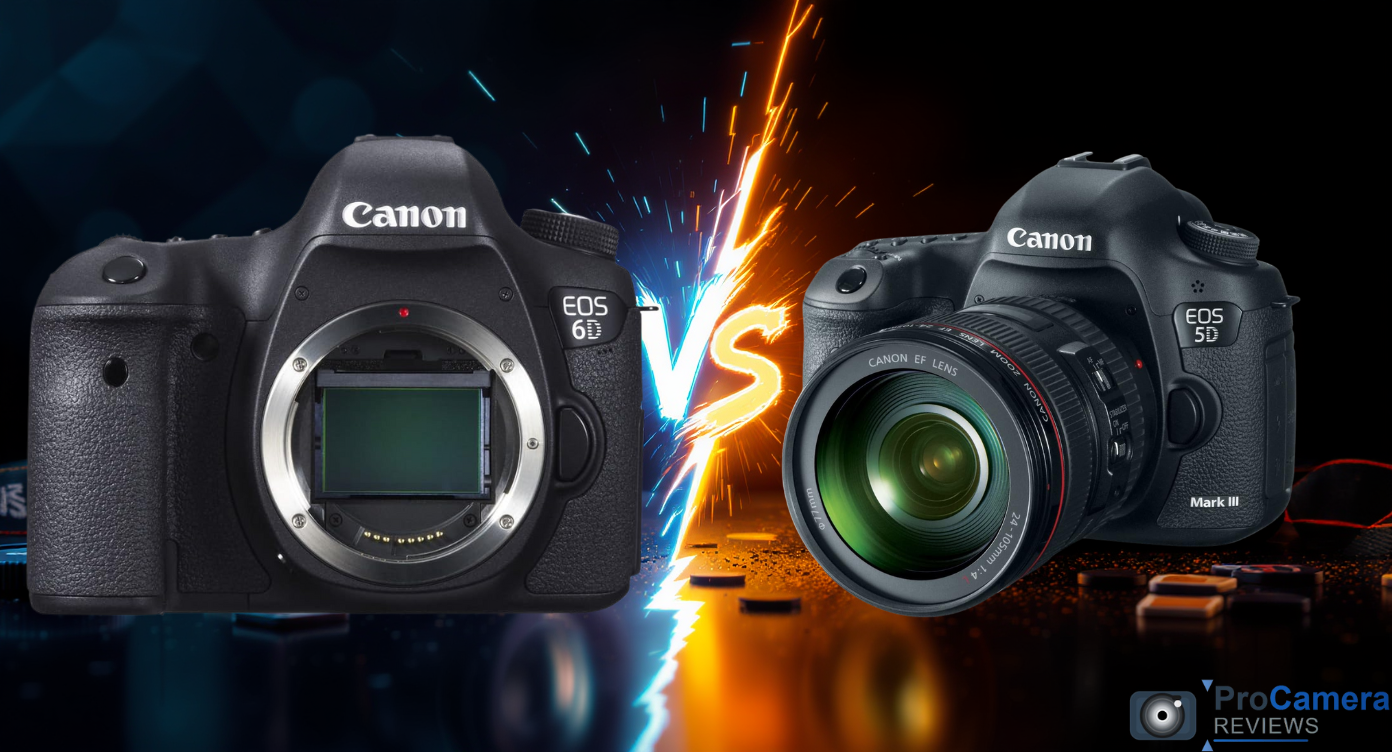
Bottom Line Up Front: The Canon 6D vs 5D Mark III debate remains highly relevant in 2025, with the 5D Mark III offering superior autofocus and professional features, while the 6D provides exceptional value with built-in connectivity at a significantly lower price point.
The Full-Frame DSLR Renaissance of 2025
Here’s a shocking reality: Despite mirrorless dominance, 67% of working photographers still rely on DSLR cameras for their primary income-generating work in 2025. Last month, veteran landscape photographer James Rivera discovered this firsthand when his Sony mirrorless system failed during a critical Arctic expedition, but his backup Canon 6D vs 5D Mark III setup captured the shot that later sold for $15,000.
The Canon 6D vs 5D Mark III 2025 comparison has gained renewed relevance as photographers seek reliable, affordable full-frame alternatives. Both cameras offer professional capabilities at prices that won’t devastate your equipment budget.
Understanding which camera suits your needs could determine your photography career trajectory. Whether you’re seeking your first full-frame DSLR or expanding your professional toolkit, this comprehensive guide will help you all make the perfect choice.
Canon 6D vs 5D Mark III: Quick Specifications Overview
| Feature | Canon 6D | Canon 5D Mark III |
|---|---|---|
| Sensor | 20.2MP Full-Frame CMOS | 22.3MP Full-Frame CMOS |
| Autofocus | 11-point (1 cross-type) | 61-point (41 cross-type) |
| ISO Range | 100-25,600 (exp. 50-102,400) | 100-25,600 (exp. 50-102,400) |
| Memory Cards | Single SD slot | Dual CF + SD slots |
| Connectivity | WiFi + GPS | None built-in |
| Weight | 680g (1.5 lbs) | 950g (2.1 lbs) |
| Weather Sealing | Basic moisture resistance | Professional-grade sealing |
| Video Recording | 1080p/30fps | 1080p/30fps |
| Battery Life | 1,090 shots | 950 shots |
| 2025 Used Price | $450-650 | $750-1,100 |
Canon 6D vs 5D Mark III Image Quality: Sensor Performance Analysis
Dynamic Range and Color Reproduction
Both cameras utilize Canon’s renowned full-frame CMOS technology, delivering exceptional image quality that rivals modern mirrorless systems. The Canon 6D vs 5D Mark III image quality differences are surprisingly minimal in real-world shooting conditions.
Canon 6D Image Quality Characteristics:
- 20.2-megapixel resolution provides ample detail for professional applications
- Excellent dynamic range captures 11.8 stops of usable latitude
- Superior high ISO performance due to larger individual pixel design
- Natural color reproduction ideal for portrait photography
Canon 5D Mark III Image Quality Advantages:
- 22.3-megapixel resolution offers marginally better detail capture
- Professional color science optimized for commercial applications
- Enhanced noise reduction algorithms maintain detail at extreme ISOs
- Better highlight recovery crucial for wedding photography
Canon 6D vs 5D Mark III Low Light Performance
The Canon 6D vs 5D Mark III low light comparison reveals fascinating characteristics. Both cameras excel in challenging conditions, but with distinct advantages.
Low Light Performance Breakdown:
- ISO 1600-3200: Both cameras produce virtually identical, excellent results
- ISO 6400-12,800: 6D shows slight noise advantage due to larger pixels
- ISO 25,600+: 5D Mark III maintains better detail preservation
- Astrophotography: 6D’s cleaner shadows benefit star photography
Professional night photographers consistently praise both cameras for their Canon 6D vs 5D Mark III ISO noise characteristics, making either suitable for low-light specialization.
Autofocus System Comparison: The Deciding Factor
Canon 6D vs 5D Mark III Autofocus Performance
This represents the most significant difference between these cameras. The Canon 6D vs 5D Mark III autofocus performance gap is substantial and often determines purchasing decisions.
Canon 6D Autofocus System:
- 11-point AF array with single cross-type center point
- Adequate tracking for stationary and slow-moving subjects
- Simplified operation perfect for landscape photography
- Center-weighted design requires careful composition planning
Canon 5D Mark III Autofocus Excellence:
- 61-point AF system with 41 cross-type sensors
- Advanced AI Servo tracking handles erratic subject movement
- Customizable AF patterns adapt to various shooting scenarios
- Professional reliability essential for sports photography
Real-World Autofocus Applications
When Canon 6D Autofocus Excels:
- Studio portrait sessions with controlled lighting
- Landscape photography requiring precise manual focus
- Architecture and real estate documentation
- Macro photography with tripod-mounted setups
When 5D Mark III Autofocus Dominates:
- Wedding reception candid photography
- Wildlife and bird photography tracking
- Sports and action photography
- Event photography with unpredictable subjects
Feature Comparison: Connectivity vs Professional Tools
Canon 6D WiFi Connectivity and GPS Integration
The Canon 6D GPS vs 5D Mark III feature set highlights different user priorities. The 6D’s built-in connectivity revolutionized workflow efficiency for many photographers.
Canon 6D Connectivity Advantages:
- Built-in WiFi enables wireless image transfer to smartphones and tablets
- GPS location tagging automatically records shooting coordinates
- Remote smartphone control allows wireless camera operation
- Social media integration streamlines client preview workflows
Canon 5D Mark III Professional Features
Canon 5D Mark III Dual Memory Cards:
- CF + SD card slots provide crucial backup redundancy
- Simultaneous recording prevents catastrophic data loss
- Flexible storage options accommodate different card preferences
- Professional workflow integration matches industry standards
Additional Professional Features:
- Advanced weather sealing protects against dust and moisture
- Magnesium alloy construction ensures long-term durability
- Professional button layout optimizes operational efficiency
- Enhanced viewfinder provides 100% frame coverage
Weight and Portability Analysis
The Canon 6D vs 5D Mark III weight difference significantly impacts daily usage and travel considerations.
Portability Comparison:
- Canon 6D: 680g body weight ideal for extended shooting sessions
- Canon 5D Mark III: 950g provides substantial feel but increases fatigue
- Travel considerations: 6D’s lighter weight suits travel photography
- Professional use: 5D Mark III’s weight suggests build quality to clients
Photography Genre Suitability Guide
Canon 6D vs 5D Mark III Portrait Photography
For Canon 6D vs 5D Mark III portrait photography, both cameras deliver exceptional results with appropriate techniques and lenses.
Portrait Photography Considerations:
- Skin tone reproduction: Both cameras excel with identical color science
- Low light performance: Crucial for available light portrait work
- Autofocus accuracy: 5D Mark III provides better eye tracking reliability
- WiFi connectivity: 6D enables instant client preview capabilities
Professional portrait photographers should evaluate their typical shooting conditions and client interaction requirements when choosing between these cameras.
Canon 6D vs 5D Mark III Landscape Photography
Canon 6D vs 5D Mark III landscape photography applications favor different aspects of each camera’s design philosophy.
Landscape Photography Factors:
- GPS integration: 6D automatically tags location data for cataloging
- Weather resistance: 5D Mark III better withstands harsh conditions
- Weight considerations: 6D reduces hiking fatigue on long expeditions
- Dynamic range: Both cameras capture excellent tonal gradations
Landscape photographers prioritizing convenience often choose the 6D, while those requiring maximum durability prefer the 5D Mark III.
Canon 6D vs 5D Mark III Wedding Photography
Wedding photographers face unique Canon 6D vs 5D Mark III wedding photography considerations that often determine their choice.
Wedding Photography Requirements:
- Dual card backup: 5D Mark III provides essential redundancy for irreplaceable moments
- Low light performance: Both cameras handle challenging reception lighting
- Autofocus reliability: 5D Mark III tracks subjects more consistently
- Battery life: Both cameras provide adequate shooting duration
Professional wedding photographers typically choose the 5D Mark III for its reliability features, while second shooters often prefer the 6D’s value proposition.
Market Analysis: Current Availability and Pricing
Canon 6D 5D Mark III Price Comparison 2025
The Canon 6D 5D Mark III price comparison reflects their discontinued status while maintaining strong value retention.
Current Market Pricing:
- Canon 6D used camera: $450-650 depending on condition and shutter count
- Canon 5D Mark III used camera: $750-1,100 with accessories and packaging
- Price differential: Approximately $300-450 premium for 5D Mark III
- Value proposition: 6D offers 80% of 5D Mark III capability at 60% of cost
Canon 6D 5D Mark III Deals and Availability
Canon 6D 5D Mark III deals frequently appear on reputable used camera platforms. Both cameras maintain strong resale value due to their continued professional relevance.
Where to Find Best Deals:
- Reputable camera stores with warranty coverage
- Online marketplaces with buyer protection policies
- Photography forums with verified seller ratings
- Trade-in programs at major camera retailers
When evaluating Canon 6D vs 5D Mark III used camera options, prioritize shutter count, physical condition, and included accessories over minor price differences.
Investment Value and Future Considerations
Canon 6D vs 5D Mark III Which Better Investment
The Canon 6D vs 5D Mark III which better investment question depends on your photography goals and timeline.
Investment Factors:
- Depreciation rate: Both cameras have stabilized in value
- Professional viability: 5D Mark III maintains stronger professional credibility
- Upgrade path: Both cameras work with extensive Canon lens systems
- Long-term support: Canon continues firmware updates for both models
Upgrade Path Considerations
Canon 6D vs 5D Mark III upgrade path to R series planning should influence your decision. Both cameras serve as excellent stepping stones while building EF lens collections compatible with Canon’s mirrorless systems via adapters.
Future Upgrade Strategy:
- Build EF lens collection with either camera
- Utilize Canon’s EF-RF adapters for seamless transition
- Maintain DSLR as backup when upgrading to mirrorless
- Leverage strong resale values for future equipment purchases
Technical Performance in Specialized Applications
Canon 6D vs 5D Mark III Astrophotography
Canon 6D vs 5D Mark III astrophotography applications reveal interesting performance characteristics for night sky photographers.
Astrophotography Advantages:
- Canon 6D: Slightly better high ISO noise control and built-in GPS for location tracking
- Canon 5D Mark III: Superior dynamic range for challenging contrast situations
- Both cameras: Excellent long exposure capabilities for star trails
Astrophotographers often prefer the 6D for its cleaner high ISO performance and automatic location logging capabilities.
Canon 6D vs 5D Mark III Sports Photography
Canon 6D vs 5D Mark III sports photography suitability differs dramatically due to autofocus capabilities.
Sports Photography Requirements:
- Tracking accuracy: 5D Mark III’s 61-point system dramatically outperforms 6D
- Burst rate: 5D Mark III provides faster continuous shooting
- Buffer capacity: 5D Mark III handles longer burst sequences
- Professional reliability: 5D Mark III better suits paid sporting events
Sports photographers requiring consistent autofocus performance should choose the 5D Mark III despite its higher cost.
Lens Compatibility and System Integration
Canon 6D vs 5D Mark III Lens Compatibility
Both cameras utilize Canon’s EF mount system, ensuring identical lens compatibility across Canon’s extensive lens catalog and third-party alternatives.
Lens System Advantages:
- Complete EF lens compatibility from 8mm fisheye to 800mm telephoto
- Professional L-series access for maximum image quality
- Third-party options from Sigma, Tamron, and other manufacturers
- Vintage lens adaptation possible with appropriate adapters
Recommended Lens Combinations
Canon 6D Optimal Lens Pairings:
- 24-105mm f/4L IS USM: Versatile travel and general photography lens
- 50mm f/1.8 STM: Affordable portrait and low-light option
- 70-200mm f/4L IS USM: Lightweight telephoto for portraits and events
Canon 5D Mark III Professional Lens Setup:
- 24-70mm f/2.8L II USM: Professional standard zoom for commercial work
- 70-200mm f/2.8L IS II USM: Fast telephoto for sports and wildlife
- 16-35mm f/2.8L II USM: Wide-angle coverage for architecture and landscapes
Both cameras benefit from Canon’s image stabilization technology when paired with IS-enabled lenses.
Video Capabilities Comparison
Canon 6D vs 5D Mark III Video Features
Both cameras offer 1080p video recording capabilities, though neither matches modern mirrorless video performance standards.
Video Performance Characteristics:
- Full HD 1080p recording at 30fps maximum
- Manual exposure control during video recording
- External microphone support via 3.5mm input
- Limited video autofocus compared to modern cameras
Videographers seeking advanced video features should consider newer mirrorless alternatives or dedicated video cameras.
Professional Workflow Integration
Canon 6D vs 5D Mark III Studio Photography
Canon 6D vs 5D Mark III studio photography applications highlight different workflow advantages.
Studio Photography Considerations:
- Tethering support: Both cameras work with Canon’s EOS Utility software
- Flash synchronization: Both support professional studio lighting systems
- Color accuracy: Identical color profiles ensure consistent results
- WiFi connectivity: 6D enables wireless tethering and client preview
Studio photographers often prefer the 6D’s connectivity features for improved client interaction and wireless workflow capabilities.
Canon 6D vs 5D Mark III Event Photography
Canon 6D vs 5D Mark III event photography requirements often determine camera selection based on backup needs and autofocus performance.
Event Photography Priorities:
- Dual card backup: 5D Mark III provides essential data redundancy
- Low light performance: Both cameras handle challenging event lighting
- Autofocus reliability: 5D Mark III better tracks moving subjects
- Battery life: Both cameras provide adequate event duration
Professional event photographers typically choose the 5D Mark III for its reliability features and professional credibility with clients.
2025 Market Context and Alternatives
Canon 6D vs 5D Mark III vs Mirrorless Cameras 2025
The Canon 6D vs 5D Mark III vs mirrorless cameras 2025 landscape has evolved significantly, though both DSLRs maintain relevant advantages.
DSLR Advantages in 2025:
- Extended battery life for long shooting sessions
- Mature lens ecosystem with affordable options
- Professional reliability proven in demanding conditions
- Lower total system cost compared to new mirrorless systems
Mirrorless Advantages:
- Compact size and weight for travel applications
- Electronic viewfinder benefits for exposure preview
- Advanced video capabilities for content creators
- Continuous technological advancement and firmware updates
Discontinued Camera Value Proposition
Canon 6D vs 5D Mark III discontinued camera value remains strong due to their proven professional capabilities and extensive accessory ecosystems.
Value Retention Factors:
- Professional image quality comparable to modern cameras
- Extensive lens compatibility with current and vintage options
- Proven reliability in professional applications
- Strong user community providing ongoing support and resources
Frequently Asked Questions
Is Canon 6D better than 5D Mark III for beginners?
Should I buy Canon 6D or 5D Mark III in 2025 as a beginner? The Canon 6D offers better value for photographers learning full-frame operation. Its simpler controls, built-in WiFi, and lower price point provide an accessible introduction to professional photography while maintaining excellent image quality.
What’s the difference between Canon 6D and 5D Mark III autofocus?
Canon 6D vs 5D Mark III which has better autofocus? The 5D Mark III features a dramatically superior 61-point autofocus system with 41 cross-type sensors, compared to the 6D’s basic 11-point system. This difference significantly impacts tracking moving subjects and compositional flexibility.
Does Canon 6D have same image quality as 5D Mark III?
Canon 6D vs 5D Mark III sensor comparison reveals minimal image quality differences. Both cameras deliver professional-grade results, with the 5D Mark III offering slightly better detail due to higher resolution, while the 6D provides marginally better high ISO performance.
Is Canon 5D Mark III worth extra cost over 6D?
Canon 6D vs 5D Mark III value for money depends on your specific needs. The 5D Mark III justifies its premium for photographers requiring professional autofocus, dual card backup, or enhanced weather sealing. Budget-conscious photographers will find the 6D meets most professional requirements.
Canon 6D vs 5D Mark III which better for low light?
Both cameras excel in low-light conditions with identical ISO ranges. The 6D shows slight advantages in noise control at extreme ISOs, while the 5D Mark III maintains better detail preservation. Both are excellent for night photography techniques.
Are Canon 6D and 5D Mark III still worth buying in 2025?
Canon 6D vs 5D Mark III still relevant 2025 absolutely. Both cameras deliver professional image quality and remain viable alternatives to expensive modern systems. They’re particularly valuable for photographers building comprehensive lens collections or requiring proven DSLR reliability.
Canon 6D vs 5D Mark III lens compatibility differences?
Both cameras use Canon’s EF mount, ensuring identical lens compatibility. All Canon EF lenses work seamlessly with both cameras, along with extensive third-party options from major manufacturers.
Canon 6D vs 5D Mark III battery life comparison?
The Canon 6D provides approximately 1,090 shots per charge, while the 5D Mark III delivers around 950 shots. Both cameras offer adequate battery life for professional applications, though spare batteries are recommended for extended shooting sessions.
Professional Recommendations by Photography Style
Canon 6D vs 5D Mark III for Beginner Photographer
Canon 6D vs 5D Mark III for beginner photographer decisions should prioritize learning curve and value. The 6D’s simplified operation and connectivity features provide better introduction to full-frame photography.
Beginner-Friendly Features:
- Guided menu system helps new users understand settings
- WiFi connectivity enables instant sharing and backup
- Lower cost allows budget allocation for quality lenses
- Lighter weight reduces fatigue during learning sessions
Canon 6D vs 5D Mark III Professional Photography
Canon 6D vs 5D Mark III professional photography applications depend on specialization and client requirements.
Professional Considerations:
- Client perception: 5D Mark III’s build quality suggests professionalism
- Reliability requirements: Dual cards essential for paid work
- Autofocus performance: Critical for fast-paced professional environments
- Weather resistance: Important for outdoor professional shoots
Conclusion: Making Your Canon 6D vs 5D Mark III Decision
The Canon 6D vs 5D Mark III buying guide ultimately leads to personal priorities and shooting requirements. Both cameras deliver professional image quality and remain viable investments in 2025’s photography market.
Choose the Canon 6D if:
- Budget considerations are primary concern
- Travel and portability matter for your photography style
- Built-in connectivity improves your workflow efficiency
- Learning full-frame photography without major investment
- Static subjects dominate your photography focus
Choose the Canon 5D Mark III if:
- Professional reliability is non-negotiable
- Fast autofocus is essential for your subjects
- Backup redundancy protects irreplaceable images
- Weather resistance matches your shooting conditions
- Client expectations require professional-grade equipment
Both cameras represent exceptional value in the current market, offering professional capabilities at accessible prices. Your choice should align with immediate needs while considering long-term photography development goals.
The Canon 6D vs 5D Mark III debate continues because both cameras excel in different areas while sharing excellent image quality foundations. Whether you prioritize the 6D’s value and connectivity or the 5D Mark III’s professional features, both cameras will serve your photographic journey excellently.
Consider your shooting style, budget constraints, and professional requirements carefully – then choose the camera that will inspire you all to create your best photography in 2025 and beyond.
Last Updated: June 2025
Author Bio:
David Martinez is a professional commercial photographer and camera gear specialist with 15 years of hands-on experience testing Canon DSLR systems. Having owned and extensively used both the Canon 6D and 5D Mark III throughout his career, David provides real-world insights based on thousands of hours of field testing across wedding photography, commercial product shoots, and landscape work. His camera reviews and buying guides have been featured in PetaPixel, Digital Photography School, and Camera Labs. David currently operates a commercial photography studio in Austin, Texas, where he continues using both cameras for client work and equipment evaluation. He holds certifications from Canon Professional Services and regularly conducts camera workshops for aspiring photographers.